Information Architecture
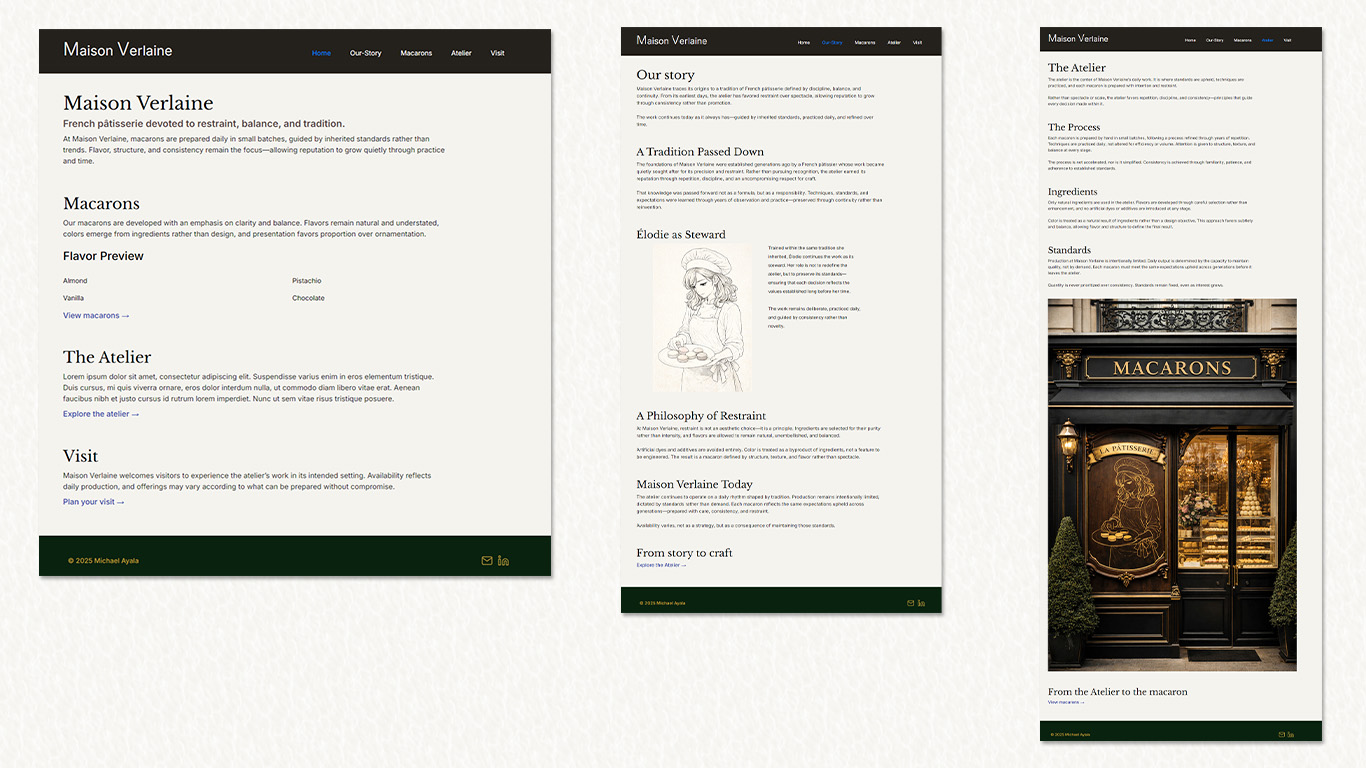
The site is structured as a narrative loop, not a funnel:
- Home — Orientation & tone setting
- Our Story — Institutional heritage
- Atelier — Process & standards
- Macarons — Product philosophy
- Visit — Experience & expectation
Each page answers a different question:
- Who are we?
- Why should this be trusted?
- How is the work done?
- What is being offered?
- What should I expect?
No page attempts to do more than one job.
Page-Level UX Decisions
Home
- No hero CTA
- Neutral language
- Navigation invites exploration
- Acts as an editorial table of contents
Our Story
- Focus on lineage, not founders
- Élodie introduced as a steward, not a protagonist
- Monochrome illustration reinforces archival tone
- Avoids dates, awards, and personal quotes
Atelier
- Process described without steps or metrics
- No behind-the-scenes spectacle
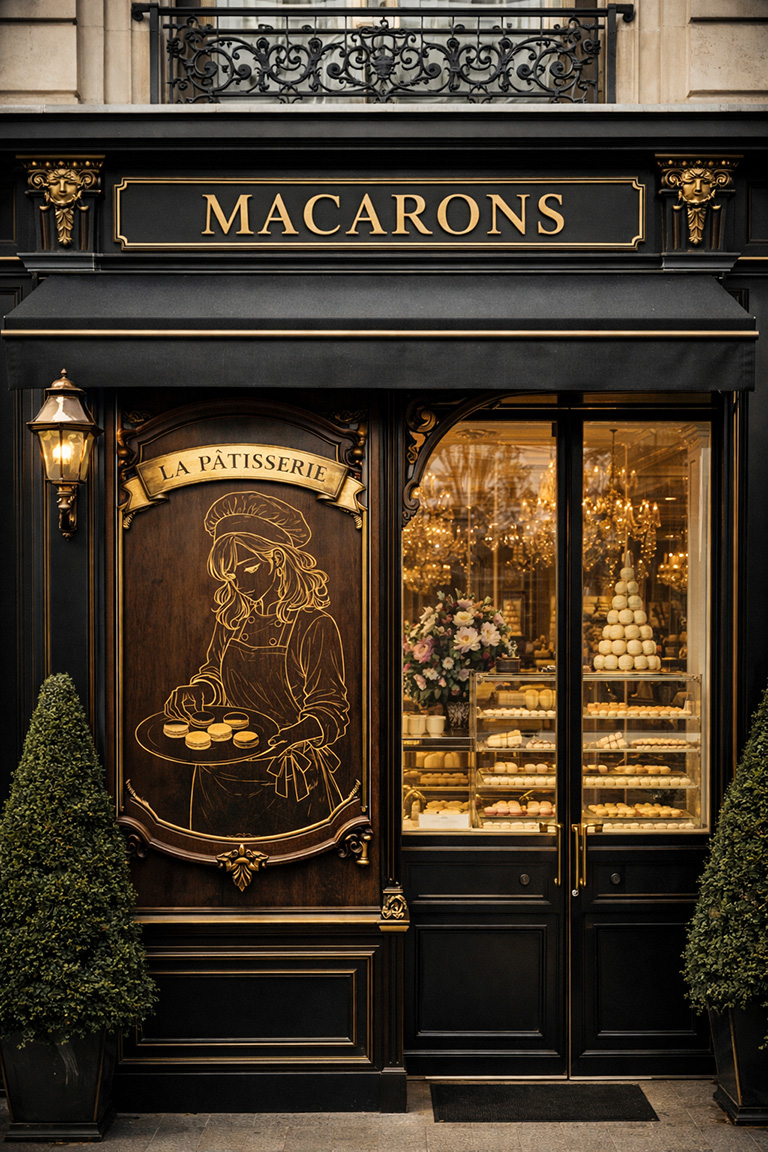
- Single image placed after trust is established
- Reinforces discipline and standards
Macarons
- No product grid
- No pricing
- No flavor lists
- Focus on balance, color restraint, and presentation
- Treats macarons as objects of craft, not items to buy
Visit
- Sets expectations before logistics
- No maps, hours, or urgency
- Visit framed as an experience shaped by standards
- Location provided only as essential information
Visual System
Typography
- Canela for headings: editorial authority
- Inter for body text: modern clarity
- No decorative flourishes
- Spacing used instead of emphasis
Color
- Soft bone background
- Near-black text
- Antique gold used sparingly
- Product colors never reused in UI
This ensures the interface never competes with the work itself.
What Was Intentionally Excluded
- CTAs and conversion funnels
- Product pricing
- Testimonials and reviews
- Promotional language
- Visual trends
- Interactive novelty
These omissions are not gaps—they are signals of confidence.
Outcome
The final experience presents Maison Verlaine as:
- Calm
- Confident
- Disciplined
- Institutional
- Trustworthy
The site demonstrates how UX can communicate value through absence, and how narrative structure can replace persuasion.